 Skip to content

Curious whether a warm, wooden slab will fit your kitchen plan or wear like new for years? We begin by clarifying what most homeowners mean when they ask this question and why the right choice depends on both design goals and daily use.
Butcher block countertops are thick, glued slabs made from solid strips or sheets of wood. They serve as islands, bartops, and accent surfaces that add natural character to mixed-material layouts.
In this guide we outline core buying factors: species, grain construction, finish, and placement. We preview common species you’ll compare—maple, oak, walnut, bamboo, cherry, and hickory—and what each brings to color, hardness, and care.
At American Home we pair design with real-life use. Our expert staff with decades of experience helps homeowners select the best option for beauty, durability, and budget. Call (517) 349-4690 or email info@americanhomekbdesign.com to talk with our design team.
Key Takeaways
- Choices hinge on look, hardness, and how you use the surface daily.
- Maple and oak are durable, walnut and cherry add warm tones, bamboo is eco-friendly.
- Finish and placement affect maintenance and lifespan.
- Butcher block pairs well with mixed countertop materials for layered designs.
- Contact our design experts at American Home for tailored guidance.
Why butcher block countertops are a popular kitchen surface in the United States
A solid wood slab blends warmth and function in many modern kitchens. We explain how this choice performs and where it fits best so you can match style and routine.
How these wood slabs are built
Butcher block is a work surface made by bonding narrow wood staves into a thick, stable slab. Builders offer edge (side) grain, end grain, and plank faces; each grain affects durability, repairability, and appearance.
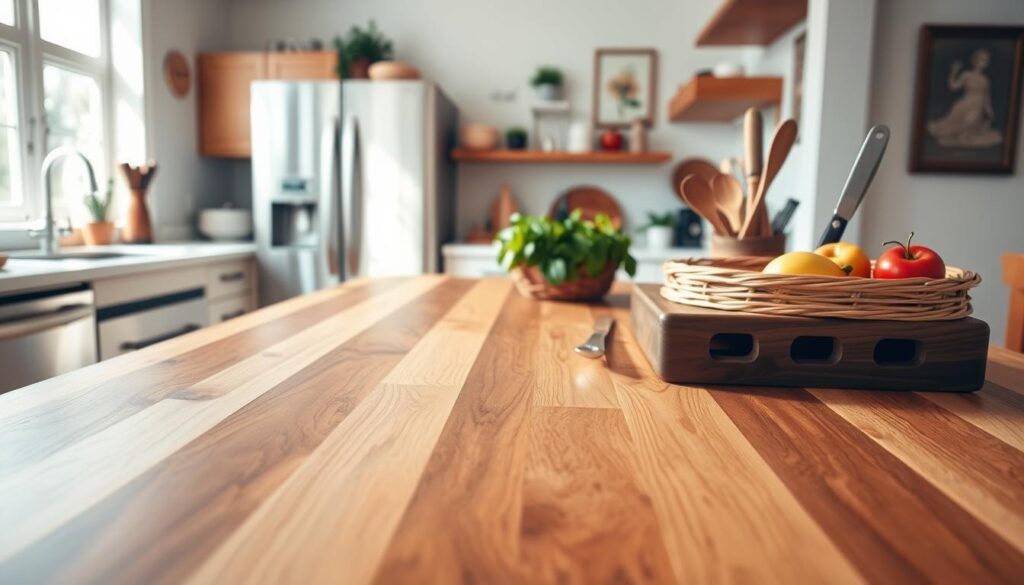
Where a block countertop fits in a kitchen
These counters shine on islands, bartops, baking stations, and coffee nooks where they invite use and gathering. Many homeowners pair a wood countertop with stone at sinks and ranges to protect high-moisture or high-heat zones.
- Design benefit: adds texture and warmth to mixed material layouts.
- Performance note: wood is durable but sensitive to standing water, heat, and harsh cleaners.
- Design process: we start with daily habits, then choose grain and finish to suit use.
What types of wood are commonly used for butcher block countertops
Choosing the right slab material sets the tone for both daily use and long-term beauty in your kitchen. Below is a compact shortlist of popular species and when each makes sense in a real household.
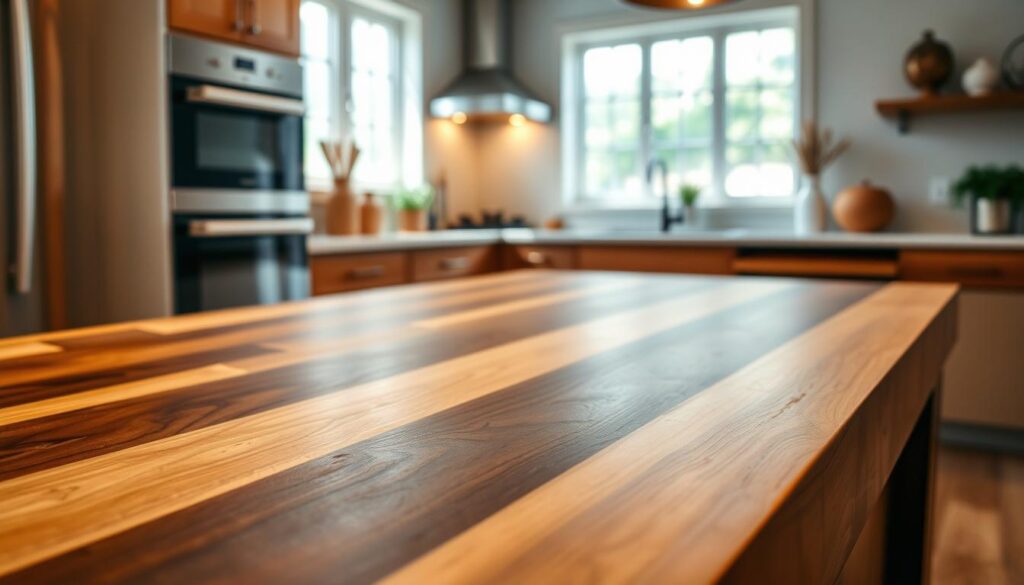
Hard maple
Maple is a go-to thanks to its high Janka rating (around 1450) and straight grain. Its uniform surface offers excellent durability for busy prep zones.
Oak
Oak brings bold grain and strength (near Janka 1300). White oak resists moisture better than red, while red oak is often more budget-friendly.
Walnut, bamboo, cherry, and hickory
Walnut is prized for rich color and contrast; it often serves as a statement surface.
Bamboo is technically a grass but delivers notable strength and water resistance—quality varies by maker.
Cherry warms and deepens with age, giving a furniture-like patina.
Hickory offers maximum hardness and a rustic, high-contrast look for heavy-use kitchens.
- Tip: Match species to your desired color, grain presence, and maintenance comfort.
- Shortlist: Maple, oak, walnut, bamboo, cherry, hickory.
Understanding grain pattern and construction for butcher block countertops
A countertop’s performance often hinges less on species and more on how the wood is built. Grain direction, joint style, and thickness shape durability, appearance, and the final look in your kitchen.
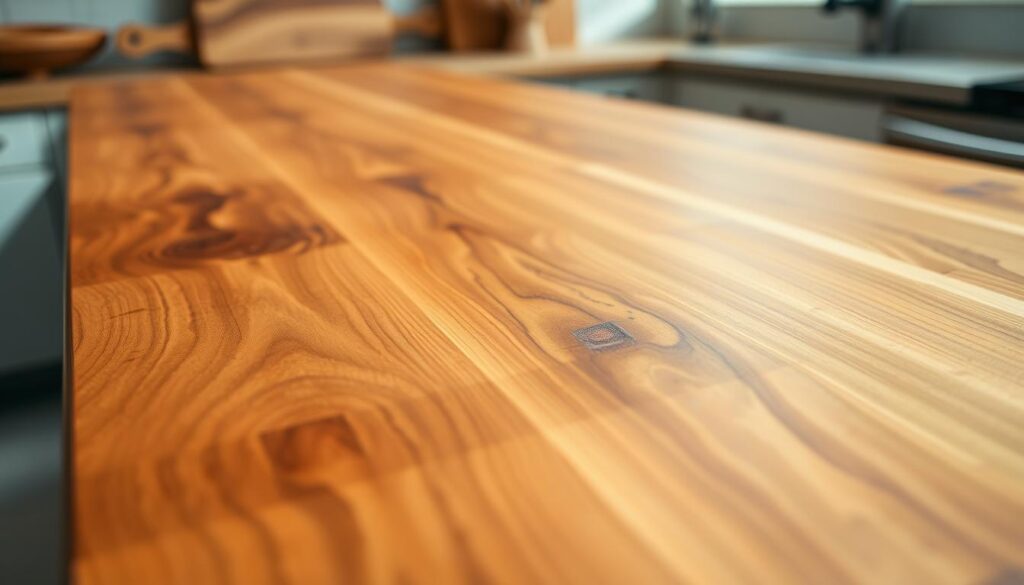
End-grain: the cutting-board style
End-grain pieces stand vertically to produce a checkerboard or brick pattern. This construction is very knife-mark resistant and usually starts at about 2″ thick.
End-grain offers top durability and hides marks, making it the leading choice when direct cutting is planned.
Edge-grain: stability and value
Edge-grain turns narrow strips on their side to create a clean, linear grain pattern. It balances stability, price, and a refined look.
This style is the most common option for long runs and everyday kitchens where cutting boards will be used.
Face-grain plank style
Face-grain uses wider boards to show bold grain movement. It delivers strong visual impact and suits design-forward projects.
Expect more dents, scratches, and possible stains if the surface sees heavy prep work.
Blended and finger-jointed patterns
Mixed lengths and tones produce a unique aesthetic. Finger-jointed slabs can combine species and colors for a one-of-a-kind block that reads like crafted furniture.
- Match construction to use: end-grain for direct cutting; edge-grain for value and balance.
- Design note: linear grain can lengthen an island; checkerboard reads as a focused work block.
- Maintenance: all wood can be renewed, but patterns show wear differently—plan finishes to suit the desired look.
How to choose the right wood species for your kitchen style, color, and budget
Deciding on a surface begins with how you want your kitchen to feel every day. First pick a visual direction: do you want a light, airy look or a richer, furniture-like presence? Then confirm performance needs and align the final choice with your budget.
Matching light woods to modern kitchens: Light-toned slabs reflect light and keep a room feeling open. A pale surface works well on an island or bright run and supports minimal, modern design. It reads as clean color that complements pale cabinetry and stainless accents.
Using darker woods to add warmth and depth: Rich species bring contrast and a premium look. Dark surfaces create a focal point and add warmth that elevates neutral floors and cabinets. Consider using a darker option as an accent if budget limits a full overhaul.
Balancing durability with daily use: Match species and construction to how you use the space. Plank faces show more dents and scratches; end-grain resists knife marks. Factor in finish and routine care so stains are easier to remove and the surface can be refinished after years of use.
- Our process: choose light vs dark, confirm performance, align budget with species and construction.
- Placement tip: use premium wood as an island or accent to get a furniture-grade look without full-perimeter cost.
- Practical note: busy households should prioritize durability; entertaining kitchens can favor color and character.
Finishes and performance factors that impact durability and maintenance
A finish is the performance layer that defines durability and care. The same wood can feel and behave very differently depending on the finish you choose.
Oil finishes for food-contact surfaces and chopping
Oil finishes penetrate the surface and keep the wood feeling natural. They are food-safe and preferred when you plan to chop directly on the countertop.
Oiled slabs are simple to refresh: spot sand and reapply oil when wear shows. Avoid cooking oils that go rancid; use dedicated maintenance products instead.
Hard shell finishes for lower-maintenance counters
Hard shell coatings like polyurethane form a protective film that resists moisture and stains. They work well around sinks and busy prep zones.
Don’t cut through that film. Repairs are more involved than with oiled surfaces, but cleaning is easier and daily upkeep is minimal.
Placement, heat, and moisture considerations
Keep wood away from standing water and direct heat. Use trivets for hot pans and wipe spills promptly to protect strength and long-term durability.
- High-moisture areas: favor hard shell or extra maintenance checks.
- Heavy chopping: choose oil finishes and plan for re-oiling cycles.
- Daily use: match finish to your lifestyle—hands-on renewal or low-maintenance wipe-downs.
Care, sustainability, and long-term value of wood countertops
Caring for a wooden surface means small habits that prevent big problems later. We focus on simple routines that protect grain detail, keep colors true, and extend durability without turning maintenance into a chore.
Cleaning and re-oiling habits that keep surfaces looking beautiful
Clean with mild soap and a slightly damp cloth. Rinse with a damp cloth or an occasional vinegar-and-water wipe for a deeper clean.
Dry thoroughly and never let liquid stand. Avoid harsh chemicals and abrasive pads that strip finish or dull grain.
For oil-finished tops, re-oil when the surface looks dry. High-use and sink-adjacent areas will need attention more often.
Sanding and refinishing to remove stains and restore the surface
Minor stains, small burns, and scratches rarely require full replacement. Light sanding brings back fresh timber, then reapply oil or a hard shell finish.
Repairability is a major long-term value: you can renew a surface instead of replacing it, much like refinishing a piece of furniture.
Reclaimed and locally sourced wood for eco-friendly choices
Choosing reclaimed or local wood reduces waste and supports regional suppliers. These slabs offer unique grain patterns and blended colors that mass-produced woods won’t match.
- Practical tip: match species and finish to your daily use for best results.
- Sustainability: reclaimed wood lowers environmental impact and adds character.
- Longevity: with the right care, these surfaces can be renewed repeatedly.
Conclusion
A thoughtful selection gives you a surface that both performs and ages with character.
Recap: pick the wood species, confirm the grain construction, choose a finish if you’ll cut on the surface, and plan placement to avoid heat and standing water.
Why choose a butcher block? It brings natural warmth to a kitchen, adapts to many design directions, and can be renewed by sanding and refinishing.
Common matchups: maple and oak for everyday durability; walnut and cherry for richer color; bamboo for eco-focused buyers; hickory for maximum hardness.
If you’re planning a kitchen update, contact American Home for expert guidance: (517) 349-4690 | info@americanhomekbdesign.com. We’re 100% customer focused and bring 60+ years of combined design experience to deliver a one-stop shopping experience in the Greater Lansing Area.


