Skip to content
Kitchen & Bath Design — Greater Lansing Area

Ever wondered how do I maintain and care for butcher block countertops? Many think a quick wipe is enough. But, the truth is more detailed. Taking good care of your butcher block is key to keeping it looking great and lasting long.
In this guide, we’ll cover the essential steps for caring for your butcher block countertops. This will help you keep your countertops in the best condition.
Butcher block countertops are a favorite in kitchens for their style and function. They are made from wood strips glued together. This gives them a unique look and strength. The type of wood used affects the countertop’s appearance and performance.
Butcher block countertops are made from solid wood. They add a warm, rustic feel to any kitchen. They come in different woods, each with its own look and feel. They are durable and perfect for home cooks.
Maple, walnut, and cherry are common woods for butcher block. Maple is popular for its durability and light color. Each wood has its own grain, color, and hardness. Choosing the right wood is key for both looks and function.
Butcher block countertops are strong, easy to care for, and welcoming. They also have natural antimicrobial properties, making them safe for food prep. With the right care, they can last decades, saving money compared to granite or marble.
Keeping butcher block surfaces clean is key to their longevity and beauty. Regular care prevents damage and keeps them safe for food prep. Simple steps can keep your butcher blocks looking great.
Wipe butcher block countertops with a damp cloth and mild dish soap after each use. This helps remove debris and germs. Check for stains and contaminants weekly. For tough stains, try a baking soda and water paste.
Use white vinegar mixed with water to disinfect weekly. It keeps your kitchen clean and safe.
Protecting butcher block surfaces from damage is important. Use a plastic cutting board for raw meats to avoid scratches and stains. Don’t put hot pots directly on the wood to prevent burns and warping.
Regular care, like avoiding harsh cleaners and too much moisture, extends your butcher block’s life.
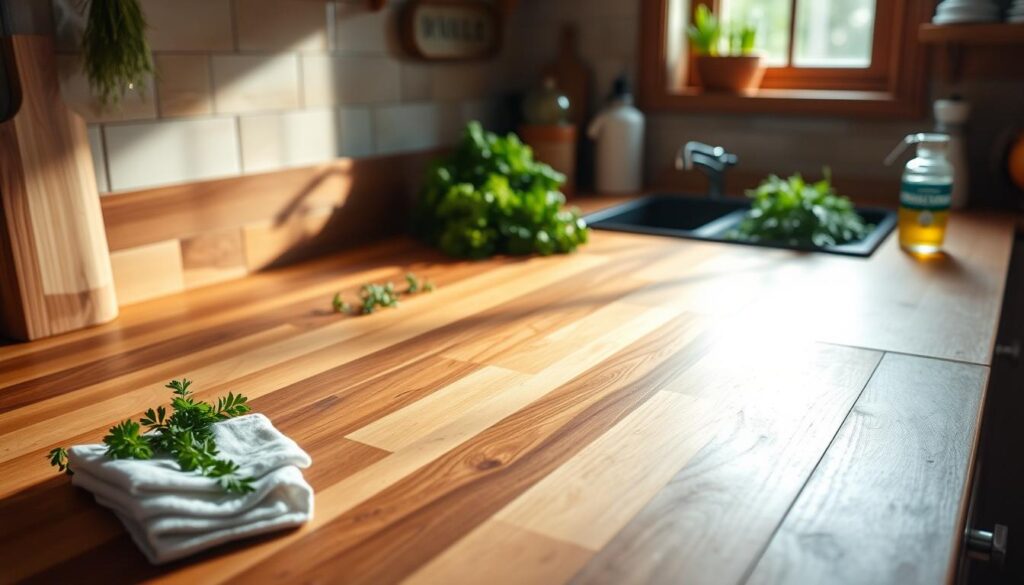
Using cutting boards helps keep your butcher block countertops in good shape. It reduces wear from knives and utensils. Choose non-porous boards for raw meats and save your butcher block for veggies and other foods.
This habit keeps your food prep surfaces in top condition and supports daily care for butcher block.
Keeping butcher block countertops clean is key. Regular deep cleaning gets rid of bacteria and keeps them looking great. Using the right methods and products is important for cleaning and disinfecting.
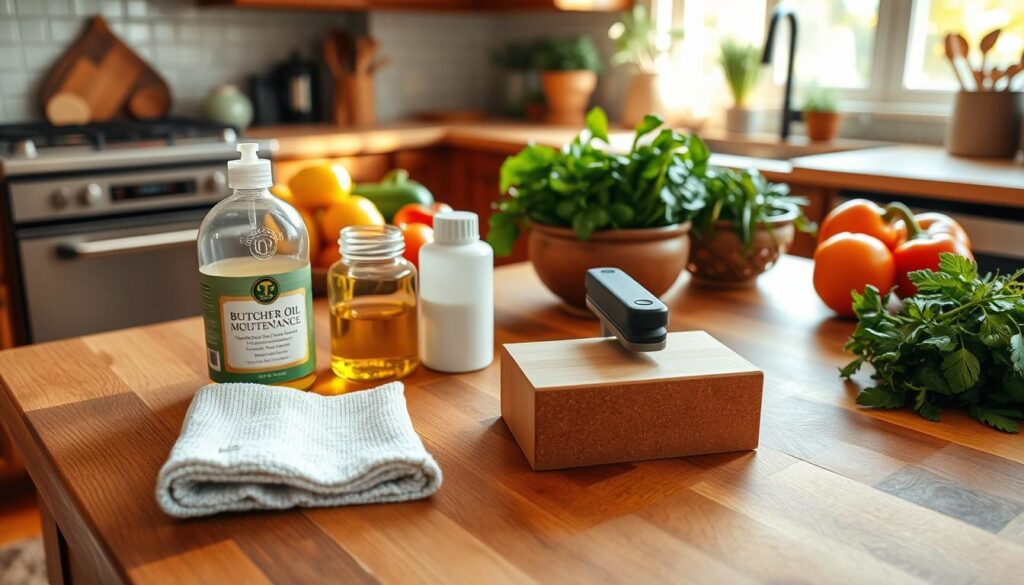
Choosing the right products is vital for butcher block care. Mild dish soap, white vinegar, and baking soda are good choices. They clean well without harming the wood. For everyday cleaning, water is fine. But dish soap is better for deeper cleans.
Stains can be a problem for butcher block owners. A mix of salt and lemon juice can remove stains. For tougher stains, use fine-grit sandpaper to gently remove the discoloration.
After sanding, re-oiling the surface is essential. It keeps the wood moist and maintains its natural look.
White vinegar is great for disinfecting butcher block countertops. Spray it on and let it sit for 10 minutes before wiping it off. This keeps your countertops clean and safe from harmful bacteria.
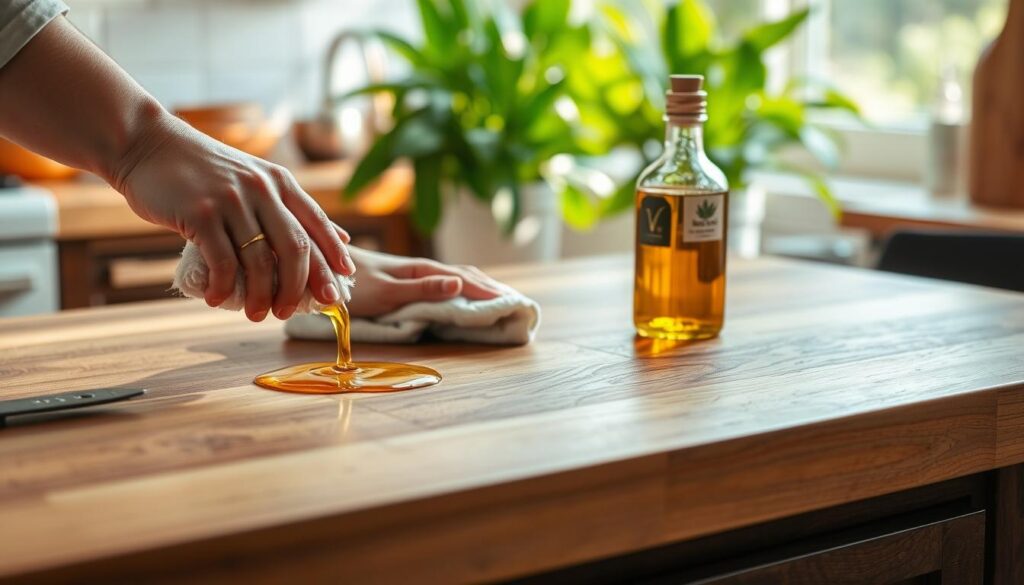
Maintaining butcher block countertops is key, and oiling is a big part of it. It makes the surface look great and keeps it safe from moisture and germs. Regular oiling helps the wood last longer and stay in good shape.
A well-oiled countertop is perfect for food prep. It also cuts down the chance of stains and damage.
Wood is porous, so it needs protection. Not oiling can cause moisture to get in, leading to cracks and warping. Regular oiling keeps the wood moist and stops bacteria from growing.
It’s important to use food-safe oils for kitchen surfaces. The right oil not only protects but also makes the wood look better.
There are many food-safe oils for butcher block surfaces. Food-grade mineral oil is popular but needs to be reapplied often. It can cause the wood to swell and warp because it doesn’t dry.
Tung oil is a better choice because it’s durable and water-resistant. It dries into the wood, giving a strong finish that lasts. Walnut and almond oils are also options, but they might cause allergies in some people. Raw linseed oil is safe because it doesn’t have harmful additives found in boiled linseed oil.
The frequency of oiling depends on how much you use your countertop. At first, oiling once a month is good. If it’s used a lot, you might need to oil it every week.
After a month, you can switch to oiling every two to six weeks. This lets the countertop adjust to its own needs. Always wait about 24 hours after oiling before using the surface. This ensures it’s fully protected and looks great.
To keep butcher block countertops looking good, you need to take steps to avoid damage. It’s important to prevent scratches on these surfaces. One way to do this is by using the right cutting techniques.
Use plastic or wooden boards for cutting food instead of the butcher block. This keeps the surface looking new. Also, avoid cutting directly on the butcher block with sharp knives to prevent scratches and dents.
Protective mats can extend the life of your butcher block. They add a protective layer against scratches while cooking. Using these mats helps maintain your countertops’ appearance for a longer time.
Watch for signs of wear on your butcher block. Look for deep scratches or water rings. If you see these, it’s time to sand and re-oil the surface. This will help keep it looking good and lasting longer.
Butcher block countertops can get minor damage from daily use. Luckily, fixing these small issues is easy to do at home. Techniques like filling scratches and sanding help keep your countertops looking great.
Minor scratches can be fixed in about 10 minutes. Use fine-grit sandpaper, like #200, to gently sand the area. This refreshes the surface without losing its beauty.
For deeper scratches and dents, wood filler can help. Sanding with the wood grain after filling ensures a smooth finish. Ignoring these small issues can cause bigger problems.
Sanding is key to fixing butcher block countertops. It removes minor scratches and up to 75% of stains or liquids. When sanding edges, do it lightly to blend with the rest of the surface.
Always sand the whole countertop to avoid uneven wear. Keeping up with cleaning helps your countertop last longer.
If DIY fixes don’t work, you might need a pro. Big cuts or cracks need a specialist’s touch. Using the surface for food prep with these issues can make things worse.
When unsure about damage, getting a pro’s opinion is best. They can make sure your butcher block is in perfect shape.
Proper care for butcher block countertops is key to avoid moisture problems. Water can harm the wood, causing it to warp or grow bacteria. Keeping them well-maintained is essential for their longevity and function.
Wood is porous and can absorb moisture, which can damage butcher block. Minimizing water exposure is important. Clean and dry the countertops regularly to prevent moisture buildup.
Sealing butcher block countertops is vital for water protection. Use food-safe oils like pure Tung Oil for better durability and water resistance. Allow the oil to soak in for 20-30 minutes. Follow the curing time of 12 to 24 hours between coats and a full cure in about 30 days for lasting protection.
Quickly cleaning up spills on butcher block helps keep it in good shape. Wipe up spills right away to avoid stains and moisture damage. Check for stains often and use natural cleaners like baking soda and lemon juice to keep the countertop strong.
Keeping your butcher block in good shape is key to its longevity. A yearly care plan is vital. It includes cleaning, resealing, and watching for any damage.
Start with daily cleaning using a damp cloth and mild soap. This stops dirt from building up. For a deeper clean, mix vinegar and water in a 1:4 ratio and use it weekly.
Oiling the surface every 3 to 4 weeks or when it looks dry is also important. After a year, you might need to reseal every six months, depending on how much you use it and your environment.
Keep an eye on your butcher block’s condition. Look out for deep scratches, gouges, or a lot of wear. Avoid letting it get too wet for too long.
Check for cracks or warping often. This ensures it stays safe and works well.
Severe damage might mean it’s time for a new butcher block. If it starts to hold more bacteria or looks worse despite regular care, think about replacing it. Watching your countertop closely helps you decide when it’s time for a change.
Keeping butcher block countertops in good shape can sometimes be tough. Knowing when to ask for help is key. Look out for deep cuts, stubborn stains, or warping. These signs mean your countertop needs more than just basic care.
Stains that won’t go away after cleaning need a deeper fix. Scratches or dents also require professional help to look and work right again. Keeping an eye on your countertops can help them last longer.
American Home boasts a team of experts with years of countertop care experience. They know how to maintain, repair, and restore surfaces. With over 60 years in the business, they offer custom solutions for your butcher block needs.
Getting help from American Home also means free consultations. These sessions help homeowners understand their countertop’s needs. They can make informed choices about care and maintenance, keeping their surfaces beautiful and functional for years.
Professional care for butcher block countertops is key to keeping them looking great. Experts at American Home make sure your countertops last longer. They prevent damage that can happen over time.
Choosing American Home means you get top-notch quality and expertise. Your kitchen will reach its full beauty and function.
American Home is known for its focus on customers. Their team gets to know you and what you need. They offer solutions that look good and work well.
Whether it’s installation or upkeep, they’ve got you covered. They make sure your countertops are both beautiful and functional.
American Home puts customers first. They listen to your concerns and answer your questions. This ensures your countertops are not just pretty but also practical for years to come.
American Home has a lot of design experience. They help pick the right wood and teach you how to care for it. Their quality and durability make them a trusted partner for your kitchen.